How Google and Salesforce's AI partnership is reshaping agent workflows
Strategies and best practices for integrating Google AI with Salesforce CRM to optimize agent workflows, unify data, and enhance human + AI collaboration.
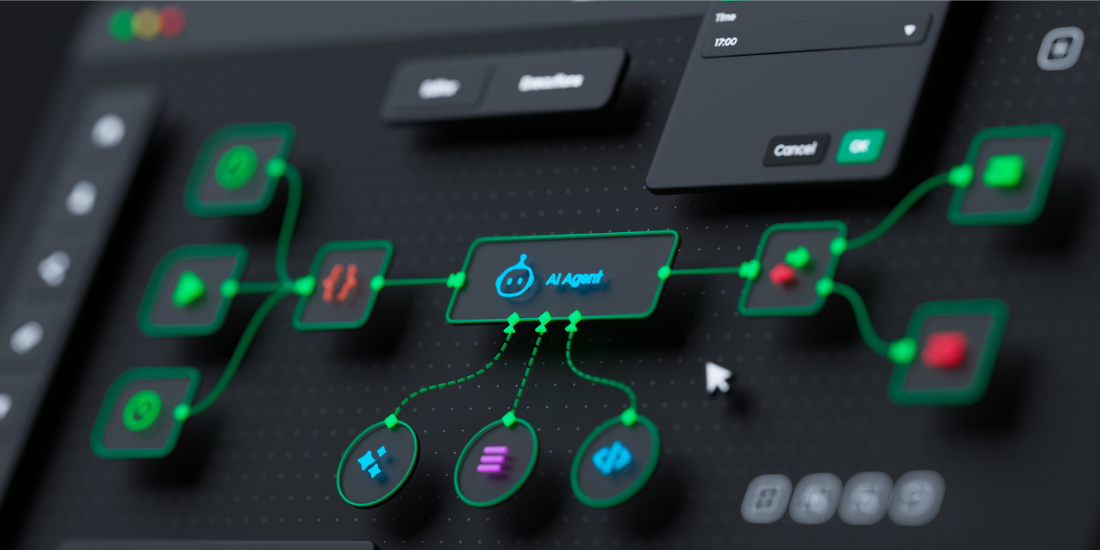
Salesforce and Google are doubling down on AI and it’s reshaping the way agents work.
In the latest episode of Unlocking Vertex AI, Caleb Johnson sat down with Salesforce expert Adam Harvey to explore how organizations can leverage the Google-Salesforce partnership to drive smarter, more efficient customer experiences.
“AI doesn’t work in isolation,” Harvey explained. “It only delivers value when it’s grounded in trusted data and thoughtful agent design.”
From unifying data to designing AI-assisted workflows, the discussion revealed practical ways teams can start leveraging this partnership today.
Understanding the three pillars of the Salesforce Google partnership
Harvey highlighted a three pronged approach that defines the collaboration between Salesforce and Google:
- Infrastructure (HyperForce): Salesforce transitioned to a modern public cloud infrastructure (initially Amazon, now also Azure and Google Cloud) to address scale and data residency needs.
- Application and data integration: Google’s CCaaS capabilities now integrate closely with Salesforce Service Cloud. Salesforce’s agent platform (Agentforce) can leverage out of the box models (including Gemini Enterprise) and custom models built with Vertex AI.
- Salesforce Data 360 (formerly Data Cloud): This zero-copy harmonization layer unifies Salesforce and external data sources, such as Google BigQuery, enabling accurate, trustworthy AI-assisted agent experiences.
Adam noted, “By connecting your internal Salesforce data with external sources, you can provide agents with a more complete view of the customer. That’s where the AI really starts to add value.”
Data is the foundation for AI success
AI only works as well as the data feeding it. “It’s not about collecting every piece of data. It’s about identifying what your AI needs to make better decisions and making sure that data is clean and unified,” says Harvey.
Data 360 allows organizations to bring in external sources, harmonize records, and create a single customer view. High-quality, accessible data ensures AI can power meaningful agentic experiences, from summarizing case histories to recommending next-best actions.
Practical agentic use cases today
Salesforce is positioning its AI evolution as a “third wave” involving autonomous digital agents, but Harvey and Johnson stressed the value of starting with incremental AI today. Examples include:
- Summarizing customer records and case histories
- Drafting follow-up emails or responses
- Suggesting next-best actions for sales or service tasks
These early “half-step” deployments help agents learn to collaborate with AI while building trust in the systems. For example, organizations can pilot Agentforce to handle repeatable tasks and demonstrate measurable efficiency gains to prove ROI early.
Designing agents: 5 key attributes
When planning agents in Salesforce, Harvey shared the following framework:
- Role: Define what the agent will do (service desk triage, sales qualification).
- Data: Determine what data is needed, where it resides and if it’s trustworthy.
- Actions: Map out what the agent should do (flows, lookups, updates) and see if existing flows exist.
- Guardrails: Define what the agent can and cannot do (security, risk, compliance).
- Channels: Identify where the agent will interact (chat, voice, Slack, web form).
“Start small,” he advised. “Pick one role, one workflow, and the data you know is accurate. That’s how you build trust in the AI.”
Looking ahead: Human + AI collaboration
Both Johnson and Harvey emphasized that AI won’t replace humans entirely but will augment their capabilities. Harvey explained, “AI can handle high-volume, repetitive tasks, while humans contribute empathy, judgment, and complex reasoning.”
The integration is becoming increasingly bidirectional: Gemini Enterprise models can power Agentforce agents, while agents built in Salesforce can extend into collaboration surfaces like Google Workspace or Slack. Johnson added, “It’s about creating a partnership between human and machine — not a handoff.”
Strategic benefits of the Google + Salesforce partnership
Harvey summarized the strategic value of leveraging both platforms:
- Google provides hyperscale compute and advanced data management
- Salesforce and Agentforce enable operational workflows and agent desktops
- Integration across collaboration platforms embeds agents directly into daily work
“The dual-vendor ecosystem reduces complexity and lets organizations focus on value, not infrastructure,” Harvey said.
Putting AI into action
The conversation between Johnson and Harvey made one point clear: AI in Salesforce works best when it’s grounded in data, thoughtfully designed for real workflows, and integrated into human-AI collaboration.
By beginning with targeted use cases and leveraging tools like Agentforce and Gemini Enterprise, organizations can build trust, generate early results, and scale AI capabilities over time.
[cta-1]
Get to know our Google practice
See how TTEC Digital helps organizations integrate Google AI with Salesforce, design smarter agent workflows, and unlock data-driven customer experiences. Our expertise bridges AI, CRM, and operational strategy to deliver measurable results.